The Butterfly Effect of Inner Stillness
The other night my husband turned on a documentary about the unexpected environmental changes that occurred during the Covid lockdowns. I was only half watching—glancing up between tasks—but every time I looked, something struck me.
The footage showed India and Africa, where people began noticing behavioral changes in wildlife once human activity quieted. Jaguars in India—rarely seen during the day and almost never in urban areas—began appearing at abandoned picnic sites, taking advantage of the lull in human presence. In Africa, cheetah mothers could suddenly call to their cubs without the competing roar of safari trucks, increasing the cubs’ chances of survival.
And in the oceans, scientists observed a rise in humpback whale communication. Without the constant hum of tourist boats, the seas became quieter, and whales could hear one another across greater distances. One oceanographer said it was like trying to talk to your friends in a noisy bar—you say less, hear less, and eventually stop trying altogether. Once the “bar noise” of humanity faded, the whales’ conversations returned.
Again and again, the documentary highlighted something we all know but often tune out: human activity—our movement, our noise, our distractions—directly and indirectly shapes the behavior and wellbeing of the natural world. And what was most remarkable wasn't the damage we cause, but how quickly nature responded the moment we paused.
A Holiday Errand Epiphany
As I was driving around today, running errands in preparation for the holidays (errands I would not be doing if not for the season), I began thinking about the ripple effects of our traditions. I try to minimize waste, conserve resources, and resist the gravitational pull of overconsumption—but it's not always easy. The holidays can be loud in every sense of the word.
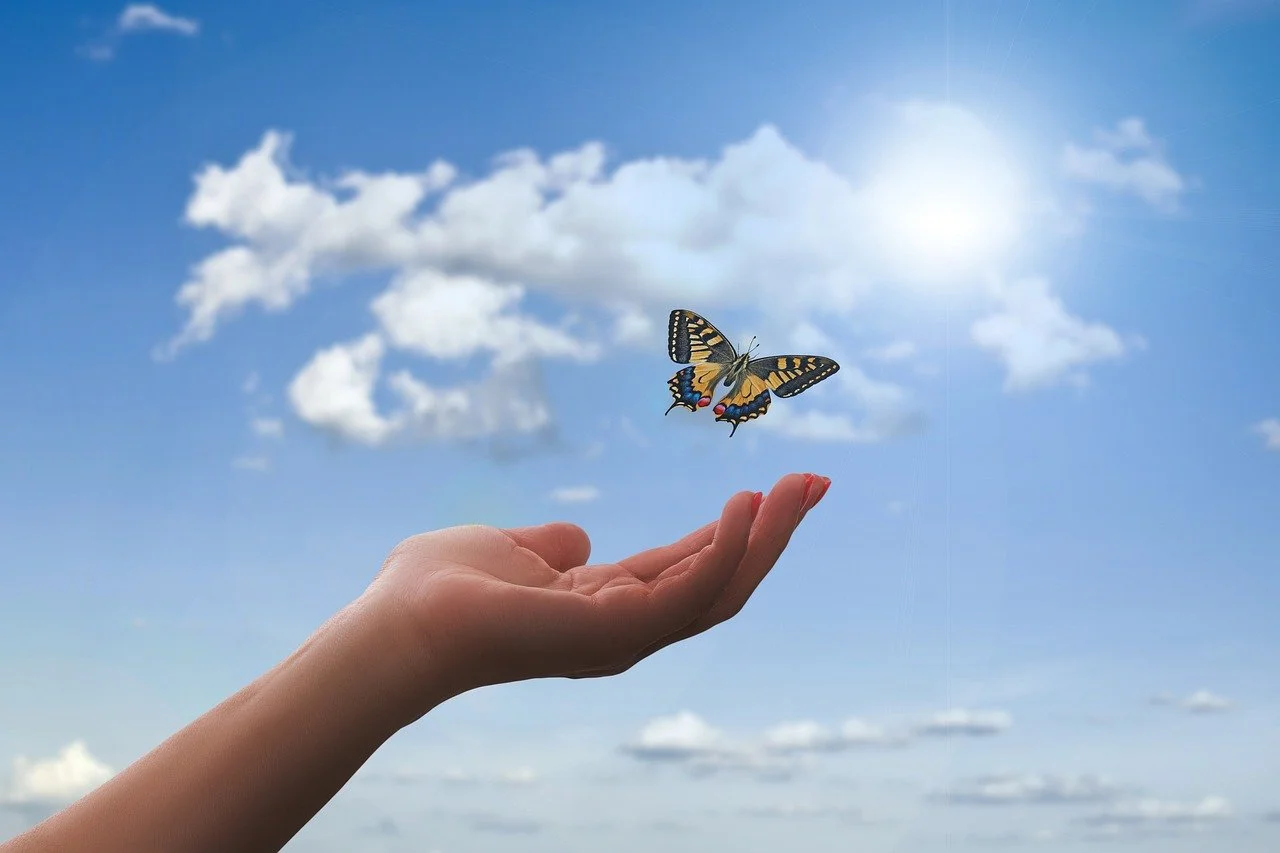
And then I remembered the butterfly effect.
Nathan Chandler describes it this way: “The butterfly effect is the idea that small, seemingly trivial events may ultimately result in something with much larger consequences – in other words, they have non-linear impacts on very complex systems. For instance, when a butterfly flaps its wings in India, that tiny change in air pressure could eventually cause a tornado in Iowa.”
If nature responds dramatically to our moments of collective stillness…
What happens when we choose stillness individually?
The Butterfly Effect of Yoga Nidra & Hypnotherapy
This is where my mind drifted to Yoga Nidra and hypnotherapy—two practices that invite us into the deepest levels of inner quiet.
In a world buzzing with noise, movement, pressure, and pace, dropping into stillness is not just restorative. It’s revolutionary.
These practices may feel small, gentle, or personal.
But so does the flap of a butterfly’s wings.
Non-linear impacts of inner work might include:
• More conscious choices.
One moment of clarity can shift a habit that shifts a lifestyle that shifts a lifetime.
• Reduced reactivity.
When we soften our internal world, we ripple peace into our relationships, our households, and our communities.
• Greater connection.
Like whales finally hearing one another when the ocean quieted, we hear our inner guidance more clearly when we remove the noise.
• A return to natural rhythms.
Yoga Nidra resets the nervous system. Hypnotherapy rewires limiting beliefs. Together, they create a quieter “internal environment” where intuition can flourish.
• Environmental impact.
A clearer, calmer mind tends to consume less, waste less, and notice more. Mindfulness makes stewardship natural.
When we pause—when we consciously choose stillness—we create invisible yet powerful waves.
Just as nature recalibrated the moment we stepped back, our own nature recalibrates the moment we step back from noise, expectation, and mental clutter.
This is the butterfly effect in soul form:
Small inner shifts, made consistently, can result in profound outer changes.
What might happen if more of us practiced mindful rest?
What would change if hundreds, thousands, or millions of people slowed their breathing, softened their thoughts, and trained their nervous systems to return to balance?
It’s not hard to imagine:
More compassion.
More presence.
Less frantic consumption.
More harmony within ourselves—and with the planet that holds us.
Nature showed us what happens when the world takes a collective exhale.
Yoga Nidra and hypnotherapy invite each of us to take our own.
And who knows?
Your decision to rest, to listen inward, to cultivate peace—
may be the butterfly wing that shifts something much larger than you can see.
